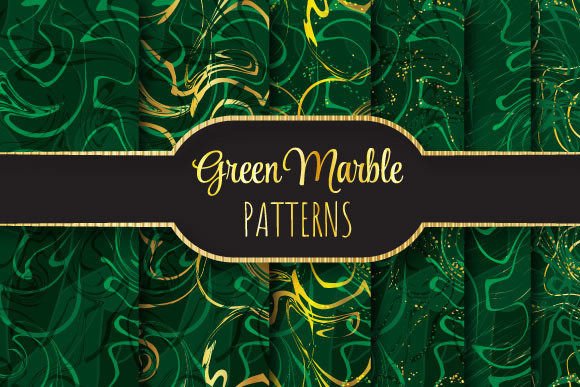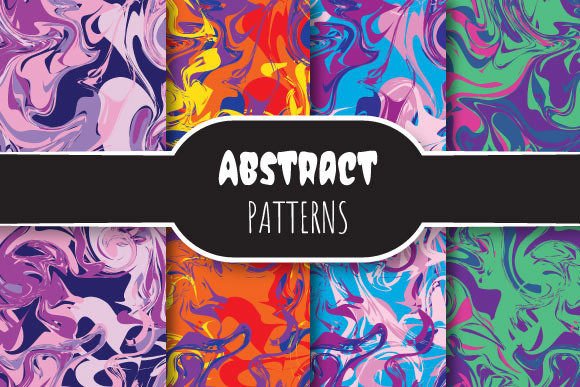
Abstract Liquid Patterns: Seamless Vector Designs for Professional Print & Digital Use
When designers need high-fidelity, infinitely scalable backgrounds that behave predictably across formats and scales, Abstract Liquid patterns deliver something rare: elegance rooted in precision. These aren’t just decorative flourishes—they’re engineered assets built for real-world production. Each pattern is a 12 × 12 inch (3600 × 3600 pixel, 300 dpi) seamless vector design, delivered as an EPS 10 file alongside four optimized JPEG variants. That combination—vector fidelity plus raster flexibility—makes Abstract Liquid uniquely suited for both print-heavy workflows and responsive digital environments.
Why Seamless Repeating Patterns Matter More Than Ever
Seamless repetition isn’t just about visual continuity—it’s about functional efficiency. A truly seamless pattern eliminates visible tile edges, so it can stretch across a 48-inch trade show banner or shrink into a 64-pixel app icon background without breaking rhythm. In practice, that means fewer manual fixes, less time spent adjusting alignment, and zero risk of misaligned repeats marring a client’s luxury packaging or editorial layout.
What sets Abstract Liquid apart is how its liquid-inspired forms—fluid gradients, organic contours, subtle wave-like undulations—maintain cohesion *across the seam*. Many abstract patterns falter at the tile boundary: a curve cuts off abruptly, a gradient resets unnaturally, or contrast shifts between tiles. Abstract Liquid avoids those pitfalls by constructing each repeat unit with intentional flow continuity—so the left edge flows into the right, and the top blends invisibly into the bottom.
The Power of EPS 10 + JPEG Bundle
The delivery format isn’t arbitrary. The core asset is an EPS 10 file—a vector standard that retains full editability in Adobe Illustrator, CorelDRAW, and Affinity Designer. You can recolor individual elements, adjust stroke weights, isolate layers, or scale to billboard size without a single pixel degrading. That’s non-negotiable for branding teams building style guides, packaging designers prepping dielines, or motion graphics artists importing into After Effects via Illustrator layers.
But vector alone isn’t always enough. That’s where the four included JPEGs add indispensable versatility:
- High-res JPEG (3600 × 3600 px): Ideal for mockups, presentations, or CMS uploads where vector support is limited.
- Web-optimized JPEG (1920 × 1920 px): Balances clarity and load speed for websites, email headers, or social banners.
- Thumbnail JPEG (600 × 600 px): Perfect for quick reference, mood boards, or internal team previews.
- Grayscale JPEG (3600 × 3600 px): Lets you test tonal balance, verify contrast for accessibility, or prep duotone treatments.
This isn’t over-delivery—it’s anticipatory design. It respects how real projects unfold: sometimes you need editable vectors; other times, you’re pasting into PowerPoint, uploading to Shopify, or sharing with a printer who requests JPEGs only.
Where Abstract Liquid Fits Into Real Workflows
Consider three common scenarios—and how Abstract Liquid streamlines each one:
1. Luxury Product Packaging
A cosmetics brand launching a new serum line needs tactile, premium-feeling packaging. Foil-stamped Abstract Liquid patterns on matte stock create depth without clutter. Because the EPS file is vector-based, the designer adjusts opacity and blending modes directly in Illustrator to simulate how light catches the foil under different angles—no guesswork, no raster artifacts. The 300 dpi resolution ensures crispness even on fine-detail spot UV applications.
2. Editorial Layouts & Book Covers
An art book designer uses a subdued Abstract Liquid pattern as a textured backdrop behind serif typography. The seamless nature prevents distraction, while the organic rhythm subtly echoes the hand-drawn illustrations inside. With the grayscale JPEG, they quickly test contrast ratios against text overlays—ensuring WCAG AA compliance before finalizing. No need to generate test swatches from scratch.
3. Brand Identity Systems
A tech startup building a modular design system incorporates Abstract Liquid as a secondary texture layer—used sparingly behind data cards or as animated micro-interactions. The vector foundation allows developers to convert paths to SVG for lightweight web use. Meanwhile, the JPEG variants let marketing teams drop ready-to-use assets into Canva templates or LinkedIn carousel posts—no designer dependency required.
Practical Considerations Before You Choose
Selecting the right pattern library isn’t just about aesthetics—it’s about compatibility, control, and longevity. Here’s what experienced designers check first:
- Tile behavior under extreme scaling: Does the pattern hold up when stretched to 200% or shrunk to 15%? Test it in your primary layout software—not just in preview mode.
- Color model flexibility: Can you easily shift from CMYK for print to RGB for screen without banding or hue shifts? Abstract Liquid files are built with device-independent color handling in mind.
- Layer organization: Are key elements grouped logically? In the EPS file, you’ll find clearly labeled layers—base flow, accent lines, texture overlays—so swapping components takes seconds, not minutes.
- Licensing clarity: All Abstract Liquid assets include commercial-use rights, with no attribution requirement—critical for agencies delivering white-labeled work.
One often-overlooked factor is file hygiene. Poorly constructed EPS files bloat file sizes, crash older Illustrator versions, or fail to embed fonts properly. Abstract Liquid files are pre-optimized: clean paths, minimal anchor points, and no hidden layers or stray objects. That translates directly to faster open/save times and smoother collaboration across team members using different software versions.
Designing With Intention—Not Just Decoration
Abstract patterns carry tone. A rigid geometric repeat signals structure and reliability. A chaotic splatter suggests energy—but risks visual noise. Abstract Liquid occupies a distinct middle ground: dynamic yet controlled, expressive but never overwhelming. Its strength lies in restraint—subtle variation in line weight, gentle saturation shifts, and rhythmic spacing that invites attention without demanding it.
That makes it especially effective in contexts where hierarchy matters: behind a headline but never competing with it; framing a product photo without flattening dimension; adding warmth to a minimalist UI without sacrificing clarity. It’s not wallpaper. It’s spatial punctuation.
And because each pattern is built on a 12 × 12 inch canvas at true 300 dpi, there’s no interpolation guesswork when placing into InDesign layouts set to exact bleed and margin specs. You drop it in, scale to fit, and move on—no resampling dialogs, no “do you want to update links?” prompts.
Final Thought: Quality You Feel in the Workflow
Great design assets don’t shout. They remove friction. They anticipate next steps. They stay out of the way—until they’re exactly what’s needed.
Abstract Liquid does that quietly: through seamless construction that holds up under scrutiny, through smart multi-format delivery that respects how teams actually work, and through a visual language that feels contemporary without chasing trends. Whether you’re prepping a gallery wall print, designing a SaaS dashboard background, or building a textile repeat for fabric printing, these patterns offer professional-grade utility—not just visual appeal.
They’re not just files. They’re workflow accelerants—designed to disappear into your process, so your ideas take center stage.