Black History Month Digital Papers: Empowering Creators with Purpose-Driven Design Assets
In today’s fast-evolving creative economy, authenticity, cultural resonance, and operational efficiency are no longer optional—they’re essential. For professionals, entrepreneurs, educators, and designers seeking to honor heritage while delivering polished, scalable work, Black History Month Digital Papers have emerged as more than decorative files. They represent a strategic convergence of cultural intentionality, digital craftsmanship, and practical utility—designed not just for aesthetics, but for impact.
What Exactly Are Black History Month Digital Papers?
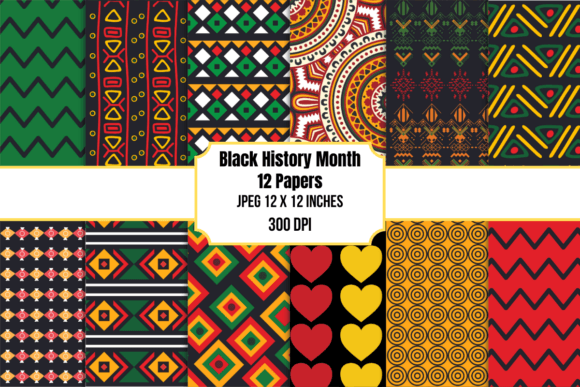
Black History Month Digital Papers are high-resolution, ready-to-use digital pattern files created specifically to support meaningful visual storytelling around Black history, achievement, resilience, and celebration. Unlike generic design assets, these papers embed symbolic motifs—Afrocentric geometries, Kente-inspired repeats, emancipation-era typography, silhouettes of iconic figures, and abstract representations of unity and legacy—into meticulously crafted 12 × 12 inch (3600 × 3600 pixel, 300 dpi) JPEGs. Each pack includes 12 distinct patterns, optimized for versatility across physical and digital applications.
These aren’t clipart or stock photos. They’re purpose-built design foundations—engineered for precision, color fidelity, and seamless scalability. Whether you’re printing custom t-shirts for a school-wide assembly, designing interactive web banners for a nonprofit campaign, or crafting limited-edition nail wraps for a boutique launch, Black History Month Digital Papers provide the structural integrity and cultural grounding your projects need.
Beyond Decoration: A Response to Shifting Creative Expectations
The rise of these digital papers reflects deeper shifts in how creators approach representation. Consumers—and especially younger, digitally native audiences—increasingly expect brands and educators to move past performative gestures and toward sustained, thoughtful engagement with identity and history. A 2023 Adobe Creative Trends Report found that 78% of professional designers now prioritize “cultural accuracy” over “trend alignment” when selecting assets for client-facing work. That’s not just ethics—it’s effectiveness. Authentic visuals build trust, deepen engagement, and reduce revision cycles.
At the same time, workflows are accelerating. Freelancers juggle tight deadlines. Small business owners manage design, production, and fulfillment solo. Educators adapt lesson plans across hybrid platforms. In this context, Black History Month Digital Papers answer a clear operational need: speed without sacrifice. With files delivered instantly, pre-sized for industry standards (12 × 12 inches aligns with scrapbook paper, die-cut templates, and print-on-demand substrates), creators skip hours of resizing, color correction, and motif research—freeing mental bandwidth for strategy, storytelling, and community connection.
Where These Digital Papers Fit in Today’s Creative Ecosystem
Consider three overlapping trends converging in real time:
- The Democratization of Professional-Grade Design: Tools like Canva, Cricut Design Space, and Adobe Express have lowered technical barriers—but raised expectations for cultural nuance. Users no longer settle for “diverse-looking” graphics; they seek assets rooted in real historical context and aesthetic tradition. Black History Month Digital Papers meet that standard with intentional pattern language—not just color palettes, but compositional logic drawn from African textile heritage and contemporary Black visual culture.
- The Rise of Micro-Community Branding: From neighborhood libraries hosting youth workshops to indie jewelry makers launching capsule collections inspired by Shirley Chisholm or Bayard Rustin, localized, values-driven branding is gaining traction. These digital papers empower micro-creators to produce cohesive, high-fidelity campaigns—whether it’s printable classroom cards, vinyl decals for a local café window, or digital album covers for spoken-word podcasts—all unified under a consistent, respectful visual language.
- The Integration of Physical + Digital Craft: The resurgence of paper crafts, DIY apparel, and tactile learning tools isn’t nostalgia—it’s pedagogy and psychology in action. Studies from the Journal of Educational Psychology show multisensory materials improve retention in history education by up to 42%. When a teacher uses Black History Month Digital Papers to create laminated timeline cards or student-designed magnet sets, they’re not just decorating a bulletin board—they’re anchoring knowledge in touch, sight, and shared making.
Real-World Applications: From Concept to Completion
The versatility of these assets lies in their resolution and format—but their value lies in how they’re deployed. Here’s how professionals are putting them to work:
- Marketing & Brand Campaigns: A regional museum used the patterns to design limited-run bottle caps for its annual Black History Month lecture series—each cap featuring a different motif tied to a speaker’s focus area (e.g., jazz history, civil rights litigation, STEM pioneers). The collectible element drove social sharing and on-site engagement.
- Educational Product Development: An edtech startup integrated the files into its digital worksheet builder, allowing teachers to generate culturally responsive handouts—math problems embedded in quilt-pattern grids, reading comprehension passages overlaid on archival-inspired textures—without needing graphic design training.
- Small-Business Merchandising: A sustainable fashion brand printed the papers onto organic cotton fabric for a line of reversible tote bags. One side featured bold Kente-derived geometry; the reverse used subtle tonal repeats of historic newspaper headlines—transforming everyday objects into quiet acts of remembrance.
- Digital Experience Design: A university’s diversity office embedded the patterns into its internal intranet dashboard during February—subtle background textures behind resource links and event calendars. It signaled institutional commitment without overwhelming interface functionality—a small but perceptible reinforcement of belonging.
Why This Moment Matters—And Why It’s Sustainable
Some may question whether themed digital assets risk seasonal obsolescence. But Black History Month Digital Papers defy that limitation—not because they’re “evergreen,” but because they’re foundational. Like a well-curated typeface library or a versatile photo archive, they serve multiple purposes across time: supporting annual campaigns, yes—but also fueling year-round curriculum development, ongoing brand expression, and intergenerational storytelling projects.
Moreover, their relevance extends beyond February. Educators use them in Juneteenth programming, MLK Day observances, and yearlong units on diasporic art history. Designers repurpose motifs for Pride Month collaborations highlighting Black LGBTQ+ trailblazers. Entrepreneurs layer them into product packaging that speaks to enduring values—not just calendar dates.
This longevity stems from fidelity to source material. The patterns don’t appropriate; they reference. They don’t generalize; they specify. And because each file is delivered at true 300 dpi resolution—3600 × 3600 pixels, precisely sized for standard craft and print workflows—they integrate seamlessly into professional pipelines, whether you’re exporting for large-format vinyl, sublimation printing on apparel, or high-res web galleries.
A Tool for Intentional Creation
In an era where attention is fragmented and authenticity is scrutinized, Black History Month Digital Papers offer something rare: a bridge between rigor and resonance. They acknowledge that design is never neutral—that every pixel carries meaning, every pattern tells a story, and every creator has agency in how that story is told.
For the freelancer building a portfolio that reflects both skill and sensitivity, for the marketer tasked with elevating community narratives without cliché, for the educator seeking tools that honor complexity while meeting curriculum standards—these papers aren’t just convenient. They’re consequential.
They remind us that honoring Black history isn’t about adding color to a blank page. It’s about recognizing the full spectrum already present—then equipping ourselves with the right tools to render it with clarity, care, and unwavering professionalism.